On Cloudmonster Review 2026: Who It Suits and Who It Doesn't
An honest On Cloudmonster review for UK runners: cushioning, fit, durability and value, plus who should buy it and who should look at a lighter shoe.
What the On Cloudmonster is and who it's aimed at
The Cloudmonster is On's most heavily cushioned road shoe. Where most of the Swiss brand's trainers are trimmed for tempo work, this one is built around a thick, rocker-shaped midsole with the signature CloudTec pods running underneath and a stiffening element through the middle of the sole. The result is a shoe that rolls you forward rather than asking you to push off hard.
That makes it a specialist rather than an all-rounder. It is designed for easy runs, recovery days, long slow miles and — for a lot of buyers — simply being on your feet all day. It is not a racing shoe, not a tempo shoe and not the lightest thing in the box.
- Type
- Neutral, max-cushion road running shoe
- Best used for
- Easy runs, recovery runs, long slow miles, walking and all-day standing
- Midsole
- Deep rocker-shaped foam with CloudTec pods underneath
- Outsole
- Rubber pods with open gaps between them
- Upper
- Engineered mesh with a padded collar and heel
- Closure
- Traditional laces
- Sizing
- Men's and women's UK sizes; check the EU/US conversion on the box
- Care
- Air dry at room temperature; never tumble dry
Verdict: a plush daily trainer that earns its place
Four out of five is the right score for a shoe this focused. Judge it as a comfort trainer and it is excellent; judge it as your only pair of running shoes and it comes up short, because it simply is not built for pace.
Strengths and weaknesses at a glance
What it does well
- Generous, well-damped cushioning that takes the sting out of long road miles
- The rocker shape keeps you rolling forward even when your form gets sloppy
- Comfortable, well-padded upper that suits wide-ish feet and long days
- Works as a walking and commuting shoe, so it earns its keep off the run
- Neutral, stable-feeling platform for a shoe this tall
Where it falls short
- Noticeably heavy compared with lighter daily trainers
- Feels sluggish and vague at anything faster than a steady plod
- Premium pricing puts it among the most expensive daily trainers
- The open gaps between the outsole pods can trap grit and small stones
- Tall stack means less ground feel and a vague sensation on uneven surfaces
The weight and the price are the two things that put most people off, and both are fair objections. Everything else on the list is a consequence of the design brief rather than a flaw.
How it scores on the things that matter
- Cushioning and comfort
- 4.5 / 5
- The standout quality: deep, forgiving foam that stays supportive over long distances.
- Versatility
- 3.0 / 5
- Brilliant for easy miles and walking, poor for tempo work. It is a second-pair shoe.
- Fit and sizing
- 4.0 / 5
- Roomy, padded and generally true to size for most runners in their usual UK size.
- Stability
- 3.5 / 5
- Wide, planted platform for a max-cushion shoe, but the height reduces ground feel.
- Durability
- 3.5 / 5
- The outsole rubber holds up on pavement; the exposed foam between pods is the weak point.
- Value for money
- 3.5 / 5
- A premium price for a specialist shoe, though heavy mileage users will get their money back.
Read the versatility score as a warning rather than a criticism. Almost every compromise in this shoe traces back to the fact that it is deliberately built for one kind of running.
The ride: cushioning, rocker and road feel
The Cloudmonster is defined by two things: the depth of foam underfoot and the curved rocker at the toe. Together they create a ride that feels like it is helping you along rather than asking much of you. On tired legs, on a long Sunday plod, that is exactly what you want.
It is not a soft, sinking shoe. The cushioning is protective rather than pillowy, and the stiffening element through the midsole stops the foam from collapsing under load. Runners coming from a very soft max-cushion shoe often find it firmer than expected; runners coming from a firm trainer find it forgiving. Either way, you feel the road less than in almost any other shoe in its class.
The trade-off is feel. At speed the shoe goes flat and vague, and picking up the pace feels like work. Save your faster sessions for something lighter and let this one do the slow miles.
Fit, sizing and the upper
The upper is an engineered mesh with a padded collar and a reasonably structured heel counter. It is not a race-day slipper; it is built for comfort over hours rather than seconds, and it holds the midfoot securely without pinching.
The toe box is on the roomier side, which suits runners with wider feet or anyone who likes to splay their toes on long runs. Most people can order their usual UK running shoe size. If you sit exactly between two sizes, or you wear thicker socks through winter, try both before committing — the padded upper means a half size down can feel snug across the top of the foot.
Off the run: walking, commuting and standing all day
This is where the Cloudmonster quietly outperforms most running shoes. The rocker, the cushioning and the stable platform all translate well to pavement walking, and the neutral grey-and-white colourways pass unnoticed with jeans or chinos.
For commuters, hospital staff, teachers and anyone who spends a shift on hard floors, it is a sensible choice: enough cushioning to take the edge off concrete, enough structure that your foot does not roll around inside it. The open channel between the outsole pods does mean wet grass and gravel car parks can flick debris up into the sole, so it is a pavement shoe rather than a trail shoe.
Durability: what to expect over time
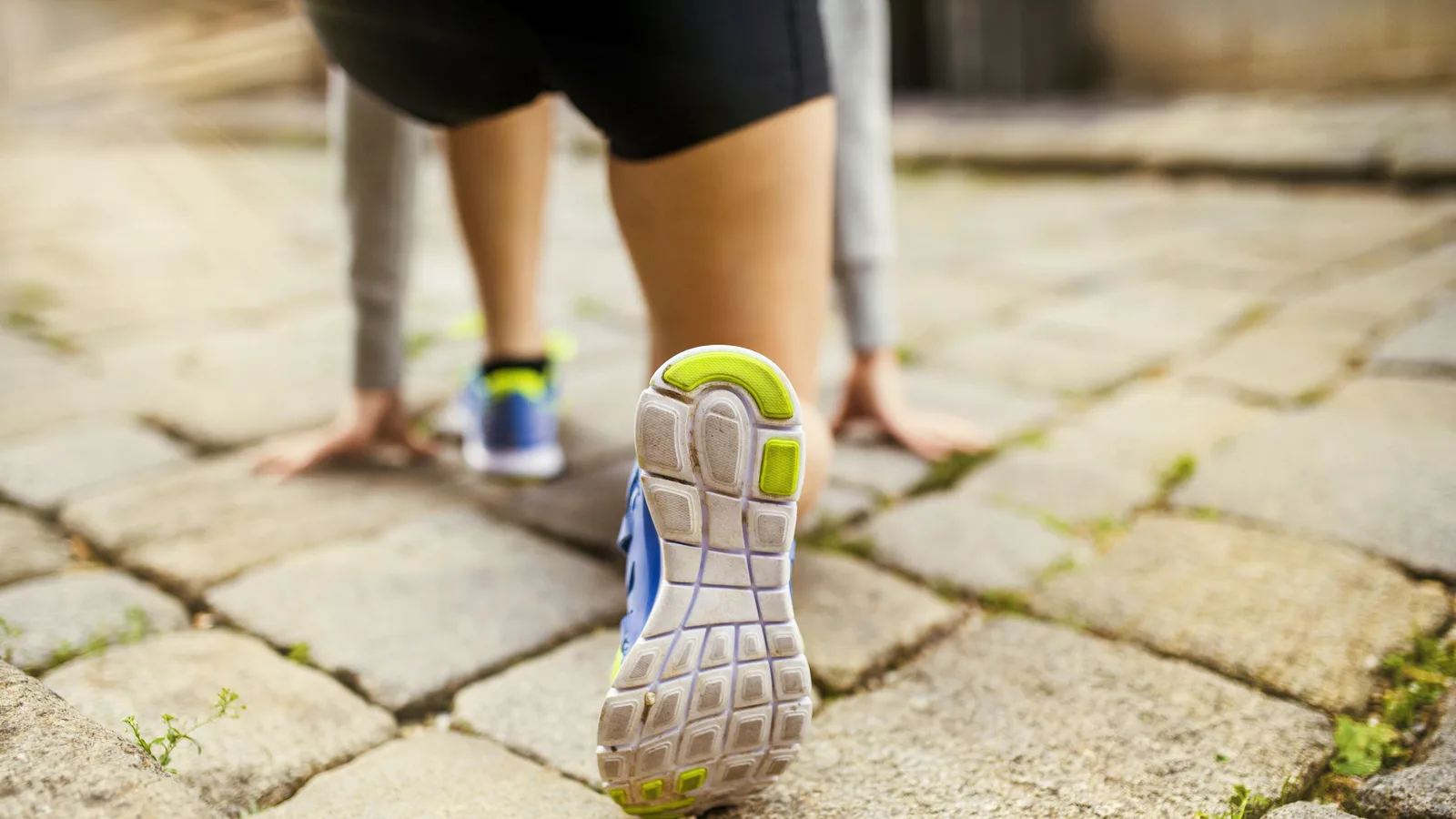
The outsole is made up of rubber pods rather than a single sheet, which puts rubber where your foot actually lands and leaves foam exposed elsewhere. On road that arrangement wears reasonably well, and the rocker shape means you are less likely to scuff through the toe.
The exposed foam between the pods is the part to watch. It abrades faster than rubber and collects grit, so if you run on gravel tracks or towpaths regularly, expect the midsole to look tired before the rubber does. As with any heavily cushioned shoe, the foam also compresses over time: once the ride starts feeling flat and hard underfoot, the cushioning is done, even if the upper still looks fine.
Who should buy it, and who should look elsewhere
Buy the Cloudmonster if your training is mostly easy, your long run is the highlight of the week, or you want a single pair that handles running, the commute and a day on your feet. Heavier runners and anyone coming back from a layoff tend to get the most out of the extra protection.
Look elsewhere if you want one shoe that covers everything. A lighter daily trainer will handle easy runs acceptably and fast runs far better, which is the right call for most runners on a single pair. Think twice as well if you want a firm, low, close-to-the-ground feel, if you need genuine motion control for heavy overpronation, or if you are buying to a tight budget — this is a premium shoe and there are cheaper ways to get cushioning.
Buying advice: versions, prices and where to buy
The Cloudmonster carries a premium RRP, so the practical advice is to buy the version, not the colourway. When On releases an update, the outgoing version usually stays on sale for a while at a lower price, and the differences between generations are often small enough that the older shoe is the better buy.
Check three things before you pay:
- Which version you are looking at, and whether the listing makes it clear
- The UK size on the box, not just the EU size — conversions vary between models
- The returns policy, because fit is the one thing you cannot judge from a product page
Buy from a retailer with a proper UK returns window rather than a marketplace seller with unclear sizing, and be wary of unusually cheap listings for a shoe at this price point.
How to get the fit right
-
Measure your foot, don't guess
Stand on a piece of paper against a wall and mark your longest toe. Compare that length to the brand's own size chart rather than assuming your size from another brand.
-
Try them with your running socks
The Cloudmonster's padded upper takes up volume. Testing in thin socks can leave you with a shoe that feels tight on a long run.
-
Check the heel hold
Lace them up and walk on the spot. Your heel should stay locked without you craning the laces tight. If it lifts, the shoe is too long or too wide for you.
-
Leave a thumb's width at the toe
You want roughly a thumb's width between your longest toe and the end of the shoe, especially if you plan to use them for long distances where feet swell.
-
Walk before you run
Wear them indoors for an hour first. It confirms the fit without scuffing the outsole, which keeps your return options open.
Frequently asked questions
Does the On Cloudmonster fit true to size?
For most people, yes — order your usual UK running shoe size. The upper is padded and the toe box is fairly roomy, so runners with narrow feet sometimes prefer a half size down, while anyone between sizes should try both.
Can I use the Cloudmonster for the gym?
For weights, cardio machines and general gym work it is fine. It is a poor choice for lifting heavy free weights, though, because the soft, tall midsole makes for an unstable platform under a loaded bar.
Is the Cloudmonster suitable for a half marathon or marathon?
It is a reasonable choice for a marathon if you are running it slowly and prioritising comfort over pace. If you are chasing a time, a lighter shoe will be less tiring over 13 or 26 miles.
How do I clean the On Cloudmonster?
Wipe the upper with a damp cloth and a little mild soap, rinse the outsole, and pull the insoles out to dry separately. Never put them in a washing machine or a tumble dryer — heat breaks down the foam.
How many miles should I get out of a pair?
It depends on your weight, gait and surfaces, but most runners replace cushioned road shoes somewhere between 300 and 500 miles. With the Cloudmonster, watch for the ride going flat rather than for holes in the outsole.
Do the CloudTec pods affect running style?
They change the feel underfoot rather than your gait. The pods compress independently to soften landings, while the rocker shape encourages a smooth roll from heel to toe. They do not correct overpronation.