Boardman HYB 8.6 Review 2026: The Sensible Commuter Hybrid?
A practical look at the Boardman HYB 8.6 hybrid: who it suits, how it copes with commuting and towpaths, and what to check before you buy.
What the Boardman HYB 8.6 is — and who it's for
The HYB 8.6 is a flat-bar hybrid from Boardman: an aluminium frame, a rigid fork, 700c wheels and hydraulic disc brakes, built for commuting, fitness rides and light trail use rather than racing. It sits in the middle of the HYB family, above the cheapest model in the range and below the lighter, pricier versions — usually the sweet spot where the equipment is good enough to live with and the price hasn't run away.
Boardman sells through Halfords, which changes the buying experience compared with a specialist shop. You get branches on most retail parks, a range of sizes you can actually sit on, and a servicing network that's easy to reach when something needs attention. For a bike that will be locked outside an office and ridden through a British winter, that convenience is worth more than it sounds.
Who it's for: riders doing roughly five to fifteen miles at a time — the commute, the school run, a Saturday loop on towpaths and bridleways — who want one machine to cover all of it. In that role the upright position, the fatter rubber and the mounting points matter far more than low weight or aerodynamic efficiency. It's also a sensible first adult bike for someone coming back to cycling after years away: stable, forgiving and simple to operate.
The verdict: a solid commuter, not a fast one
The reasoning behind the score is straightforward. The 8.6 doesn't try to be everything: it's a practical, planted hybrid with the right fittings for daily use and a frame that will take years of abuse. It loses a mark for the things that are hard to fix later — weight, a limited gear range under load, and one hand position that gets old on long days out.
Strengths and weaknesses at a glance
What it does well
- Hydraulic disc brakes keep their bite and lever feel through a wet winter far better than cable discs or rim brakes.
- Proper mounting points for full-length mudguards and a rear rack, so it can be a real car replacement rather than a toy.
- An upright, stable riding position that's kind to your back, shoulders and neck in stop-start traffic.
- Wide 700c tyres and a rigid fork shrug off rough tarmac, potholes and towpath chatter without extra weight or servicing.
- Standard, non-proprietary components — replaceable at any shop and cheap to keep running.
Where it falls short
- It's a planted, weighty ride rather than a lively one; climbing out of the saddle feels like work.
- The gear range is fine for rolling roads but runs short on steep climbs with panniers loaded.
- Flat bars give you one hand position, which gets uncomfortable past a couple of hours in the saddle.
- Sold mainly through Halfords, so there's little cross-shopping on price and no relationship with a local independent shop.
- The build leaves obvious upgrade bait: tyres, saddle and wheels are where the money was saved.
How it scores on the things that matter
A hybrid lives or dies on a handful of practical criteria rather than on paper specifications. Here's how the 8.6 stacks up on the ones that decide whether you'll still be riding it in February.
- Value as an everyday commuter
- 4.0 / 5
- Hydraulic discs, rack and guard mounts and a sound frameset in one package — the sort of kit that costs extra when added to a cheaper bike later.
- Comfort over 10–20 miles
- 4.0 / 5
- Upright position and wide tyres soak up rough surfaces nicely. Past two hours the single hand position starts to tell.
- Braking in wet weather
- 4.5 / 5
- Hydraulic discs hold their lever feel and stopping power in the rain, which is exactly where a British commuter earns its keep.
- Everyday practicality
- 4.5 / 5
- Mounts for mudguards and a rear rack plus room for wider tyres turn it into a proper utility bike — shopping, laptop, lights, all of it.
- Gearing for hills and loads
- 3.5 / 5
- Broad enough for rolling terrain. Add panniers and a steep climb and you'll be hunting for a lower bottom gear.
- Weight and liveliness
- 3.0 / 5
- Steady and planted rather than quick. Fine on the flat and in traffic; less fun when the road tilts up.
Living with it: commute, towpath and weekend
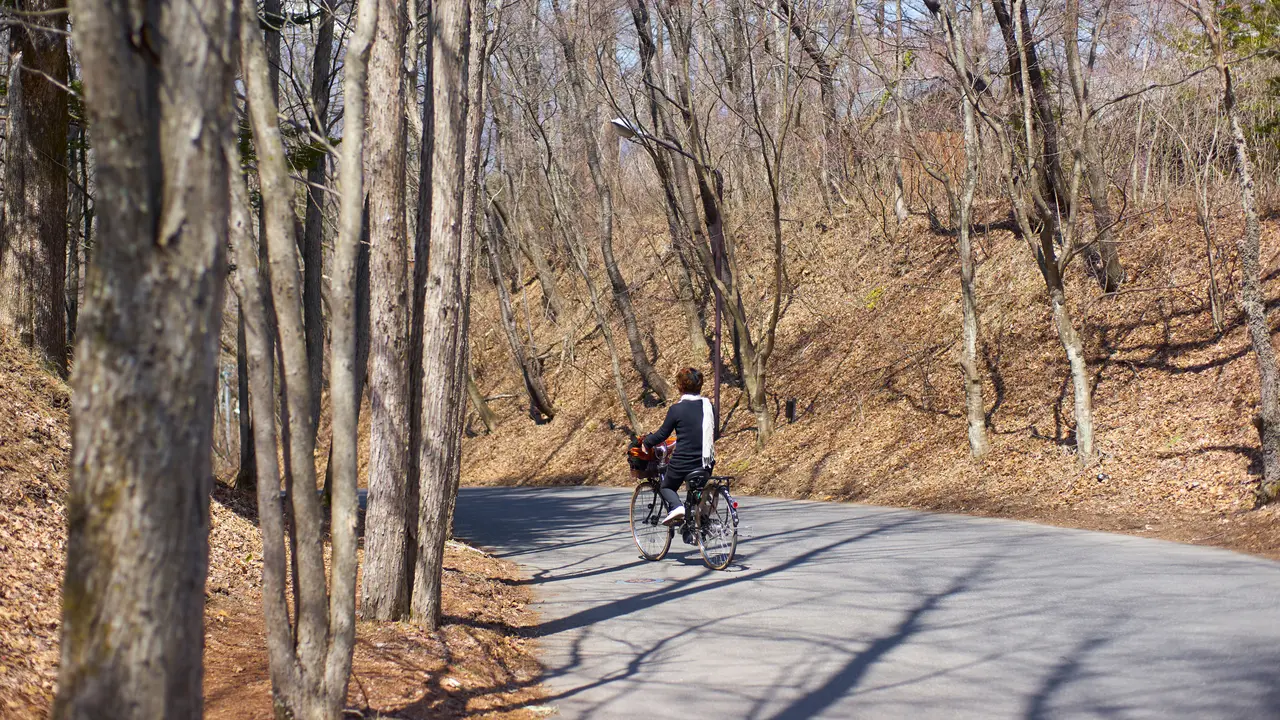
In traffic the upright position is the making of the bike. You can see over parked cars, you're visible to drivers, and your neck isn't craned at a racing angle at every junction. The wide tyres and rigid fork take the edge off the state of British road surfaces, and the low-maintenance simplicity of a rigid fork means one less thing to service each spring.
On a canal towpath or a rails-to-trails path the 8.6 is in its element: predictable steering, enough float in the tyres to cope with packed gravel and tree roots, and brakes that work when the surface turns damp. Where it stops being fun is anything properly rough — this is not a mountain bike, and mud, rock and steep loose descents will find the limit of its grip and clearance quickly.
The compromises show up on longer rides. Once you're past a couple of hours the flat bar leaves you with one place to put your hands, and the extra weight and upright posture cost you speed on hills and into a headwind. For a ten-mile commute that's an easy trade. For a hundred-mile sportive it isn't.
Buying advice: sizing, checks and sensible upgrades
-
Start with Boardman's size chart, then check standover
Sizing is the one thing you can't upgrade later. Match your height to the published chart, then stand over the frame with both feet flat — you want a couple of centimetres of clearance. If you're between sizes, the smaller frame with a longer stem is far easier to live with than a frame that's too long.
-
Set the saddle height before you judge the ride
A test ride with the saddle too low will make any bike feel wrong. Set it so your heel just touches the pedal at the bottom of the stroke with your leg straight, then ride it properly before deciding.
-
Test both brakes from walking pace
Squeeze each lever firmly. You want a solid feel that stops well short of the bar. A lever that pulls back to the grip suggests air in the system or a bleed that's overdue.
-
Shift through the whole range under load
Find a slope and run up and down the gears while pedalling hard. Skipping, hesitation or a chain that won't settle indicates cable tension or wear that needs sorting before you part with money.
-
Inspect the frame and fork carefully
Look along the tubes for dents, deep scratches and cracks around the welds, and check the fork and head tube for anything that suggests a front-end impact. Paint damage is cosmetic; a bent fork is not.
-
Budget for the bits that make it a commuter
Full-length mudguards, a rear rack, a decent lock and a set of lights are part of the real cost of a commuting bike. Factor them in from the start rather than discovering you need them in the first wet week of November.
-
Get the shop to fit the guards before collection
Fitting full-length mudguards on a new bike in a cold garage is fiddly, and alignment takes patience. If you're buying new, ask for them to be fitted as part of the handover.
On upgrades, be disciplined. Tyres, saddle and grips are contact points and worth changing early, because they're cheap and they change how the bike feels more than anything else. Beyond that, a new wheelset or a wider-range cassette rarely makes financial sense on a frame at this level — the money is better saved towards the next model up, which brings a lighter frame and better components together.
Who should buy it, and who should look elsewhere
Buy it if you want one bike for the working week and the odd weekend path, you'd rather have hydraulic brakes and rack mounts than a lighter frame, and you value being able to walk into a branch and get it sorted. It's also a strong choice for a rider returning to cycling who wants stability and a commanding view of traffic rather than a low, racy stance.
Look elsewhere if your riding is genuinely fast and road-focused, if you intend to take on technical off-road terrain, or if you're chasing the lowest possible weight. The same applies if you want a belt drive, hub gears or an electric assist — those are different bikes with different jobs, and no amount of upgrading will turn the 8.6 into one of them. Be honest about the riding you'll actually do, not the riding you'd like to imagine.
Boardman HYB 8.6: common questions
What size Boardman HYB 8.6 do I need?
Boardman publishes a height-based size guide for the HYB range, and the frames step up in small increments. If you fall between two sizes, take the smaller one and adjust the stem and saddle rather than stretching to the larger frame — a bike that's too long is difficult and expensive to correct.
Can I fit mudguards and a pannier rack to the HYB 8.6?
Yes. The frame and fork carry the mounts for both, which is one of the main reasons to pick it over a road bike for commuting. Go for full-length guards rather than clip-ons if you're riding through winter — they keep far more spray off your back and drivetrain.
Is a hybrid much slower than a road bike?
Less than people expect in town, more than they expect on hills. The upright position and extra weight cost you most into a headwind and on climbs; in stop-start traffic, where braking and visibility matter more, the gap largely disappears.
Will it cope with towpaths and gravel tracks?
Packed towpaths, canal gravel and forest tracks are well within its comfort zone. Roots, deep mud and rocky descents are not — grip and tyre clearance run out quickly, and the rigid fork transmits everything it hits.
Should I upgrade the HYB 8.6 or buy a better model?
Change the tyres, saddle and grips if they don't suit you, because those are cheap and make a real difference. A new wheelset or a wider gear range usually costs more than it returns on a frame at this level — put the money towards the next model up instead.