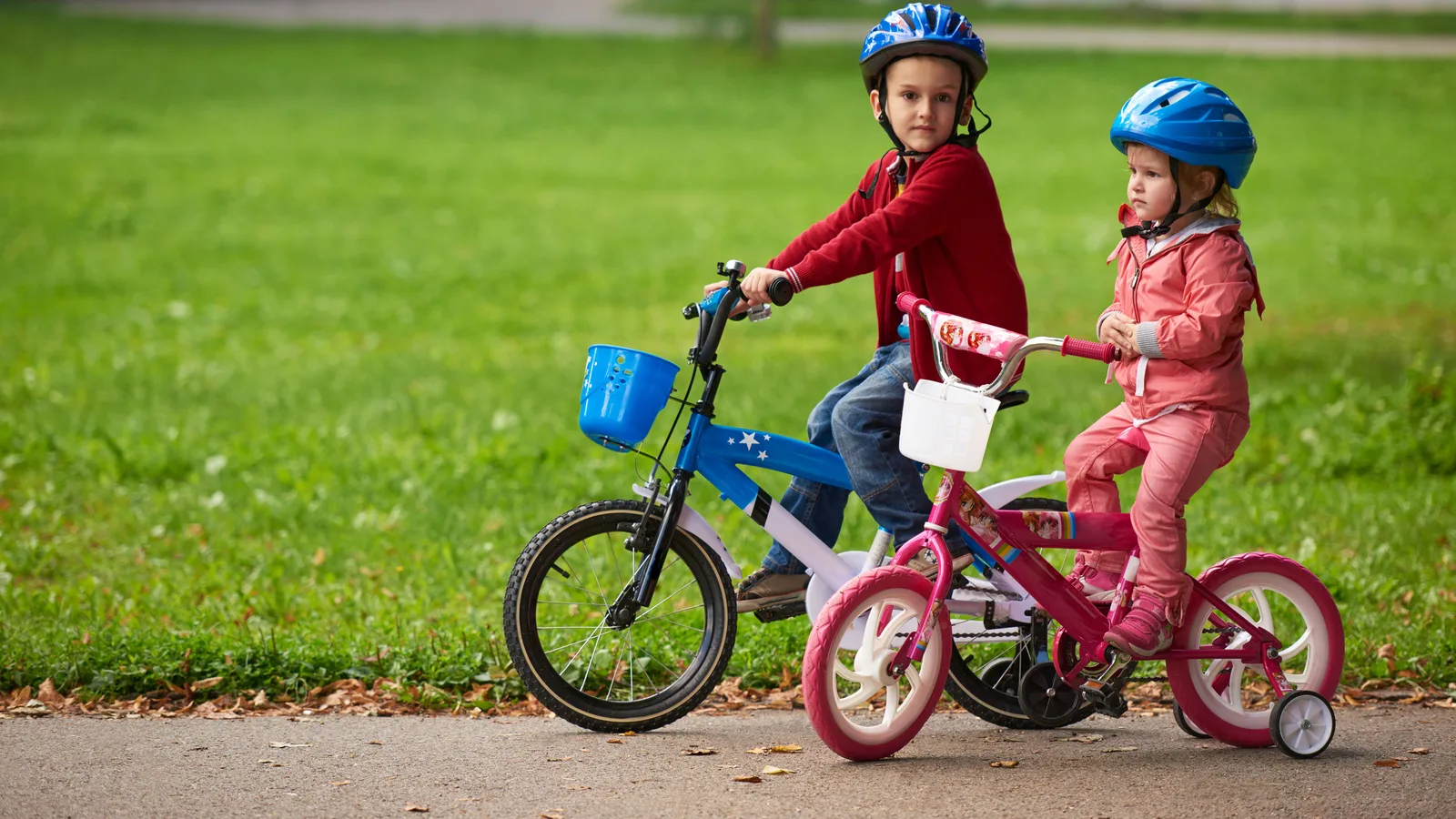
How to ride a bike: a step-by-step guide for beginners
Learn to ride a bike with balance-first steps: set the saddle, glide before pedalling, steer, stop and start safely on a flat, traffic-free surface.
The short answer: balance first, pedals second
Riding a bike is one skill dressed up as several. The hard part is balancing; pedalling, steering and braking all get easy once you can coast with your feet off the ground. So spend your first sessions gliding rather than pedalling, and the rest follows quickly.
The short version: drop the saddle until both feet reach the floor, find a flat traffic-free surface, push yourself along and lift your feet for a second or two at a time. When you can coast and steer without thinking about it, rest your feet on the pedals and start turning them. Most people get their first unaided pedal strokes within a handful of 20–30 minute sessions. Children often get there faster than adults, who tend to think their way through it — both are normal.
What you need before your first go
You do not need much, but the bike does need to be safe and set up for learning rather than for speed. Give it a quick check before every session: wheels spin straight, quick-release levers are closed, the chain sits on the ring, nothing rattles, and both brakes stop the bike before the lever pulls back to the handlebar.
Wear flat trainers with grippy soles and trousers that will not catch in the chain. Tie your laces. A close-fitting jacket is better than a loose one that flaps and distracts you.
- Surface
- Smooth, flat tarmac or a firm path with plenty of run-off space
- Saddle height while learning
- Low enough that both feet reach the ground flat, heels down
- Saddle height once confident
- High enough for a slight bend in the knee at the bottom of the pedal stroke
- Tyres
- Firm — squeeze them; they should feel hard, not spongy
- Brakes
- Both levers pull firmly and the bike stops well before the lever reaches the bar
- Helmet
- Level on the head, two fingers above the eyebrows, straps in a V under the ears
- Session length
- 20–30 minutes, stopping while it is still enjoyable
How to ride a bike, step by step
-
Set the bike up for learning
Drop the saddle until you can sit on it with both feet flat on the ground. Check the brakes work and the tyres are firm. Do not worry about looking efficient — this is a temporary setup.
-
Pick a surface with nothing to hit
A flat, empty tarmac area is ideal: a quiet park path, a closed car park on a Sunday morning, or a school playground out of hours. Grass looks softer but it is bumpy, slow and hides holes, which makes balancing harder.
-
Walk the bike along, then scoot
Straddle the bike with both feet down and push yourself along with your feet, keeping your hands on the bars and your eyes up. This teaches steering and gets you used to the bike moving underneath you.
-
Lift your feet and glide
Push off a little harder and let both feet leave the ground for a second, then two, then longer. Keep your arms relaxed and look at where you are going, not at the front wheel. Repeat until you can coast several metres without putting a foot down.
-
Rest your feet on the pedals while gliding
Once gliding feels steady, push off as before and place your feet on the pedals without turning them. You are still coasting; you are just getting used to where your feet go.
-
Make your first pedal turns
Start with one pedal at roughly the two o'clock position, push down firmly and let the bike run. Aim for one full turn, then two. If the bike feels wobbly, push off harder — a slow bike is a wobbly bike.
-
Look ahead and steer
Your bike follows your eyes. Look five to ten metres ahead rather than at the ground in front of the wheel, and steer with small, relaxed movements rather than grabbing the bars.
-
Stop well, then raise the saddle
Practise stopping with both brakes, squeezing progressively rather than grabbing. When you can start, glide, steer and stop, raise the saddle in small steps until your leg is almost straight at the bottom of the pedal stroke.
Stopping, starting and turning under control
Braking is the part beginners rush and later regret. Use both brakes together and squeeze rather than snatch. On wet, loose or gravelly ground, use the back brake a little more and keep your weight back over the saddle. Practise stopping from walking pace until it is boring, then from a gentle roll.
For a clean start, put the pedal you favour at about two o'clock, push down firmly to get the bike rolling, then bring the other foot up. Choose an easier gear than you think you need.
Before a corner, slow down and then look through the turn to where you want to end up. Lean the bike slightly, keep the inside pedal up if you are pedalling through, and let the bike do the work. Braking hard mid-corner is what puts new riders on the floor.
What commonly goes wrong, and the fix
| Problem | What is usually happening | What to do |
|---|---|---|
| Wobbling the moment the feet leave the ground | You are looking down at the wheel and gripping the bars hard | Look five to ten metres ahead, loosen your grip, drop your shoulders and glide a little faster |
| Cannot get going from standing | Starting in too high a gear with the pedal at the wrong height | Put the pedal at two o'clock, push down firmly and get rolling before the second foot joins in |
| Feet keep dropping to the ground | The saddle is still set high for this stage | Drop the saddle, rebuild the glide, then raise it again in small steps |
| Veering sideways when braking | Grabbing one brake, usually the front | Squeeze both levers together and keep your weight back |
| Aching hands and shoulders | Straight, locked arms and a saddle set too far forward | Bend the elbows, relax the grip and check that you are not reaching for the bars |
| Bike feels twitchy at speed | Over-steering with big movements | Use small inputs and let the bike run; it is more stable the faster it rolls |
Teaching a child to ride
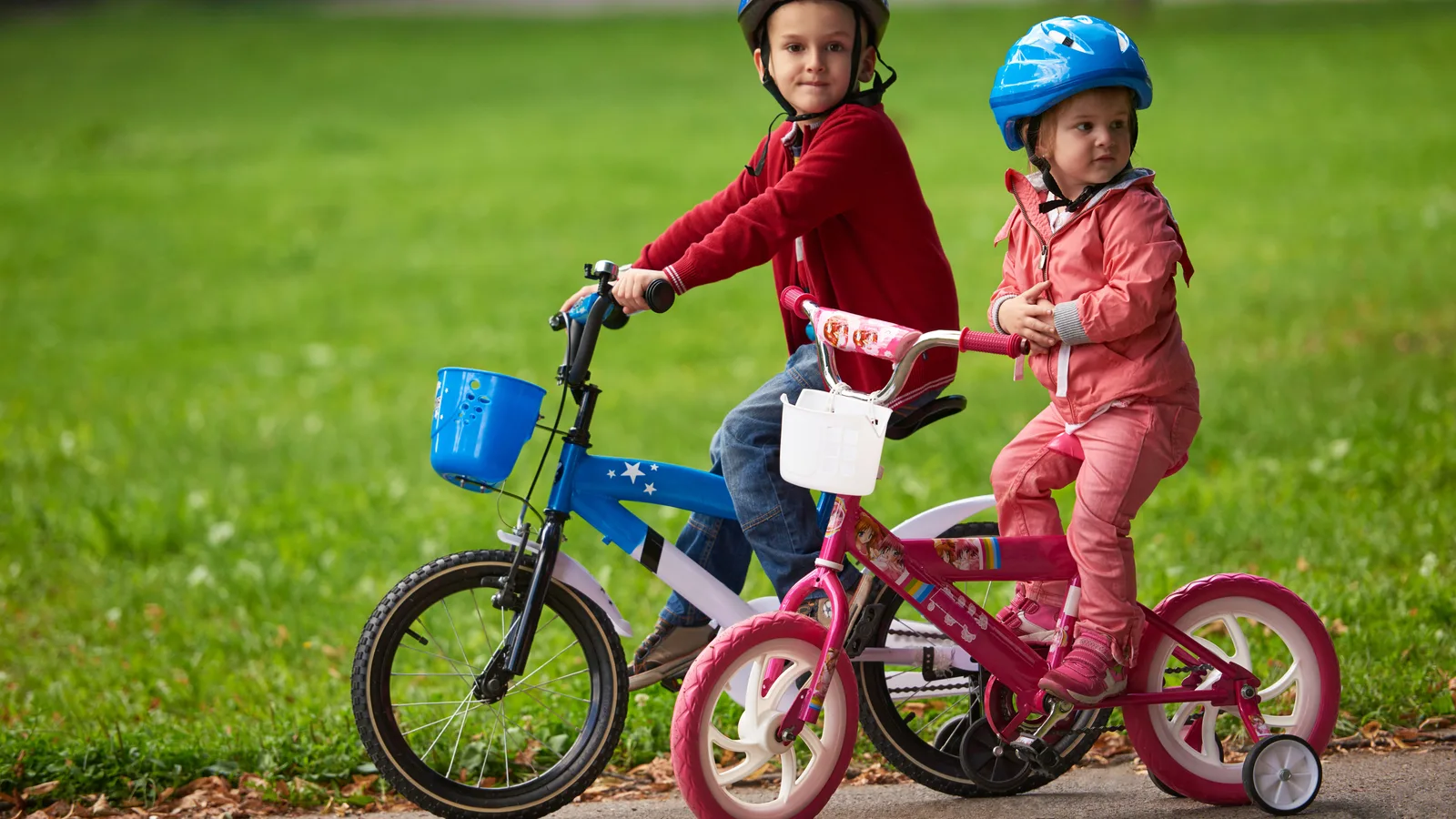
Children learn the same way adults do — balance before pedals — but they need shorter sessions, more praise and a job you can do without holding the bike. Hold the back of the saddle or, better still, the child's shoulders, so they feel supported without you steering for them. Never hold the handlebar: they will lean on you and never find their own balance.
-
Check the bike and the brakes
Make sure the bike is the right size — your child should be able to put both feet flat on the ground with the saddle low — and that the brakes are light enough for small hands to pull.
-
Take the stabilisers off when they can steer
Stabilisers teach pedalling but not balancing. Once your child can steer and stop confidently, remove them, or remove the pedals too and treat the bike as a balance bike.
-
Practise gliding on a gentle slope
Find a slight downhill on smooth tarmac, with you walking alongside. Let them push off and lift their feet, and keep the sessions short.
-
Add pedals back and hold the shoulders
Once they can coast, refit the pedals. Hold their shoulders lightly, walk beside them, and let go without announcing it — children often ride perfectly until they are told you have let go.
-
Finish every session on a success
End with something they can already do, such as three clean stops or a glide down the slope. Confidence, not distance, is what gets them back on the bike tomorrow.
Where to practise and how to stay safe
Traffic-free tarmac is the right place for your first weeks: park paths, closed car parks, school playgrounds out of hours, and traffic-free cycle tracks. Towpaths and shared paths are fine but busy with walkers and dogs, so keep your speed down, use a bell early and give way.
In the UK, adults should not cycle on the pavement, and a bike counts as a vehicle on the road: you need working lights and reflectors after dark. Once you are riding confidently, choose quiet streets at quiet times rather than busy roads, and ride predictably — a steady line is safer than hugging the kerb and being squeezed.
Wear a helmet that fits properly even though it is not a legal requirement in the UK, and wear something bright. Leave headphones out until you have plenty of experience; hearing traffic is part of riding safely.
Frequently asked questions
How long does it usually take to learn to ride a bike?
Most children manage their first unaided pedal strokes after a few short sessions spread over a week or two. Adults often need several sessions of 20–30 minutes, and the total is usually a few hours of practice rather than weeks of it.
Can I learn as an adult if I never rode as a child?
Yes. Use a bike small enough that both feet reach the ground, take the pedals off and learn to glide first. Many adults find a single session with a qualified cycle trainer speeds things up, because someone else can spot the habits holding them back.
Is it better to learn with stabilisers?
Stabilisers teach pedalling and steering but not balancing, so children often rely on them for months and then have to start again when they come off. A balance bike, or a normal bike with the pedals removed, teaches balance directly.
Do I have to wear a helmet when cycling in the UK?
There is no legal requirement for adults or children to wear a helmet on the road in the UK, but a correctly fitted one is strongly recommended, especially while learning. It should sit level and low on the forehead with the straps snug under the ears.
Why does my bike feel unstable at slow speed?
Bikes are self-correcting once they roll, so at walking pace you have to steer constantly to stay upright. Push off a little more firmly, look further ahead and let the bike run — trying to creep along is what actually makes it feel wobbly.